

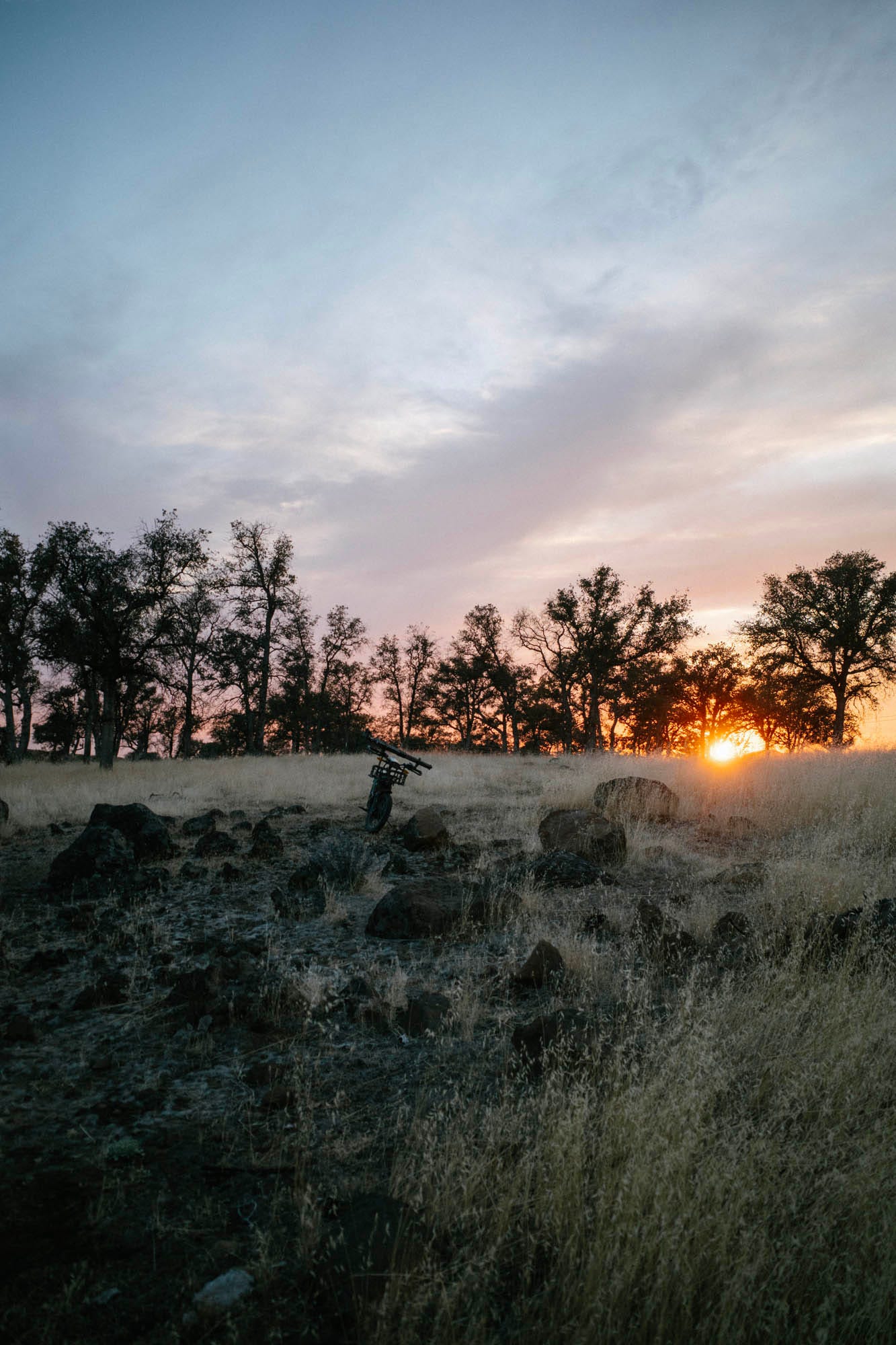
I rolled over in the bed in the back of my van and checked my phone. 4:30. Still too early. I was awake, but not awake enough to get up two and a half hours before sunrise. I dozed off and checked my phone again at 5:20. A fully reasonable hour to get moving on my first day of deer hunting season in Northern California.
Sensing me move, Tim shimmied up from the foot of the bed for his morning words of affirmation and chest rubs. As I threw on my pants and bino harness, Tim watched from the barn doors on the side of my Ford Transit, slowly realizing that he wouldn’t be coming with me on this morning’s outing.
As I crested the hill, the first hint of pink showed over the foothills of the Sierras. Riding down the ridge over the creek, I paused every five hundred yards or so and scanned the opposite side of the canyon, eight hundred to one thousand yards away. Finally, after 11 months of anticipation, tinkering in my shop, and countless trips setting up trail cameras and checking cards in the woods, I was back in the hills with a rifle in my hand, looking for deer.
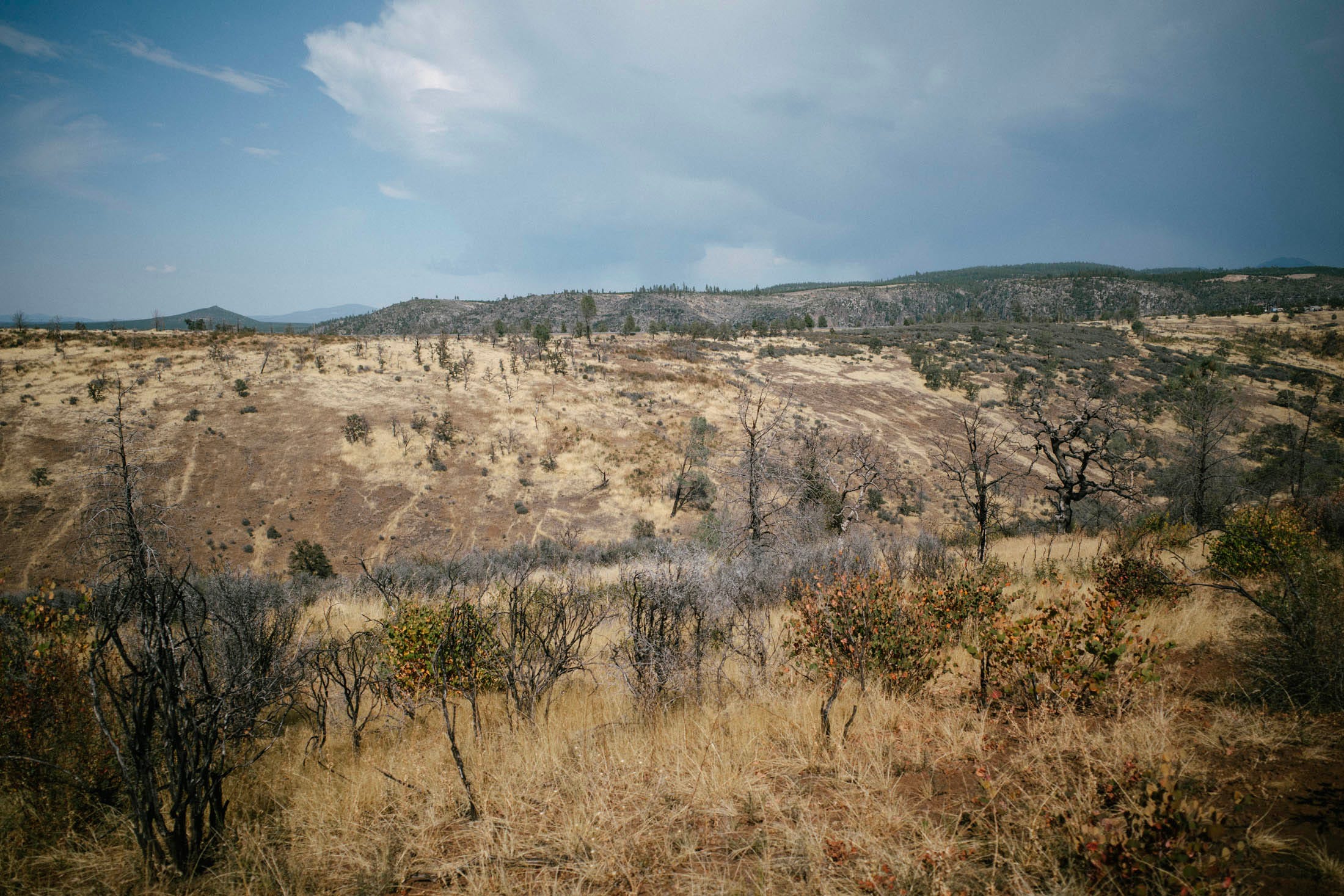
I saw a dozen or so does on my path up the drainage. Marking their positions on onX Hunt, a mapping app designed for hunting, I continued up the ridge until a little after sunrise, when I spotted a good-sized buck feeding around the edge of a thick patch of manzanita and chaparral. I watched him for a half hour until he bedded down under a group of burned-out oaks in waist-high grass. After months of planning and anticipation, I didn’t want to pack up and head home early. He was a great deer, but I wanted to keep looking. I watched him bedded for twenty minutes, packed up my stuff, and headed on.
For the next two days, I covered roughly 40 miles on an e-bike and hiked around a third of that, looking for deer. I saw plenty of does, a young brown fazed black bear, countless quail, and butterflies eating fresh bear shit. Every few hours, I’d head back to the van and let Tim run around chasing ground squirrels. Penny, the matriarch who lives on the ranch, left food for me on the tailgate. On hot afternoons, I stripped down to my underwear and cooled off in the stream by my van. I talked with people on the ranch about the buck I’d seen, and they all agreed: he was a good buck, and if they saw him, they would have shot him, regardless of what day of the trip it was.
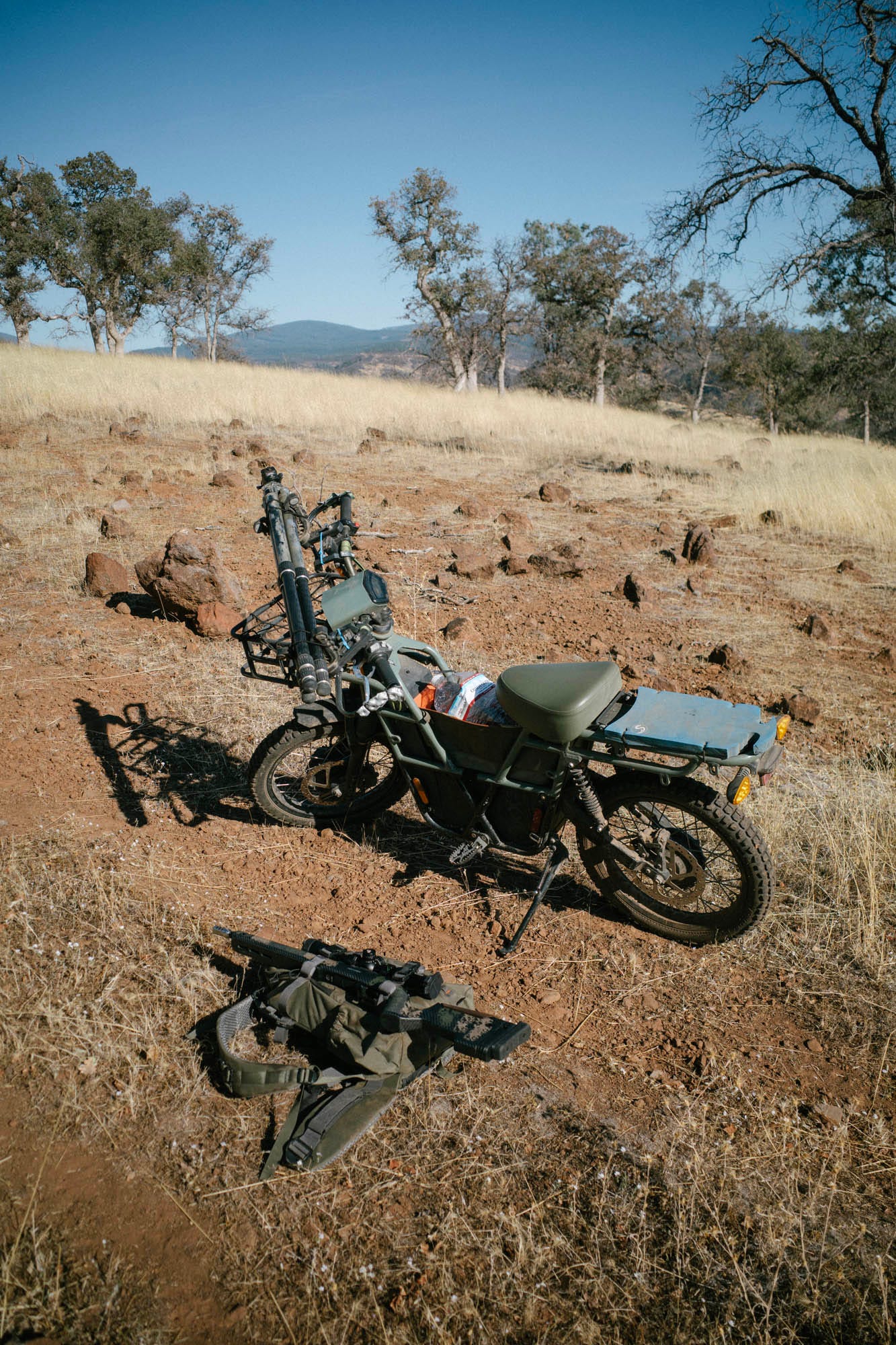
On the third morning, I was up at 5 and let Tim run around as I gathered my things for the day’s hunt. I left him solemnly staring at me from the driver’s window at 6:20, and I headed up the drainage in search of a big buck off on his own.
I saw the same does in the same places I’d seen them earlier in the trip. At a little after 7, I spotted the buck I’d seen earlier and decided to heed the advice of the other people on the ranch. As he fed down the hill out of a group of manzanita, I set up my bipod and figured out some rear support. For twenty minutes, I waited as he fed down into the small field 400 yards across from me, periodically ranging and adjusting my dial and shooting position.
As he walked into an opening, he paused to eat, and I broke the shot and watched the bullet land over his back. Spooked, he ran to the next group of bushes and stood looking up the hill for the source of the chaos, failing to realize that the real danger was from across the valley.
Confused by the miss, I re-ranged the bush he was on, pulled out my Kestrel weather station, updated my shooting solution, and dialed a few tenths of mil off the hold. After a few minutes, he walked out from the bushes, and I shot again. This time he kicked, a telltale sign of a vitals hit, and ran off, but I saw the impact on dirt. I racked another round and shot again, and he kicked again, but I saw another bullet impact. Pulling up my binos, I watched as he ran up the hill into a thick patch of bushes.
Baffled by what happened with the first shot, the kicks gave me a sense of retribution. Normally, a deer only kicks like that when mortally wounded. As I packed up my stuff, I worked through the coming logistics of getting the deer broken down, packed up, and back into my coolers in the van.
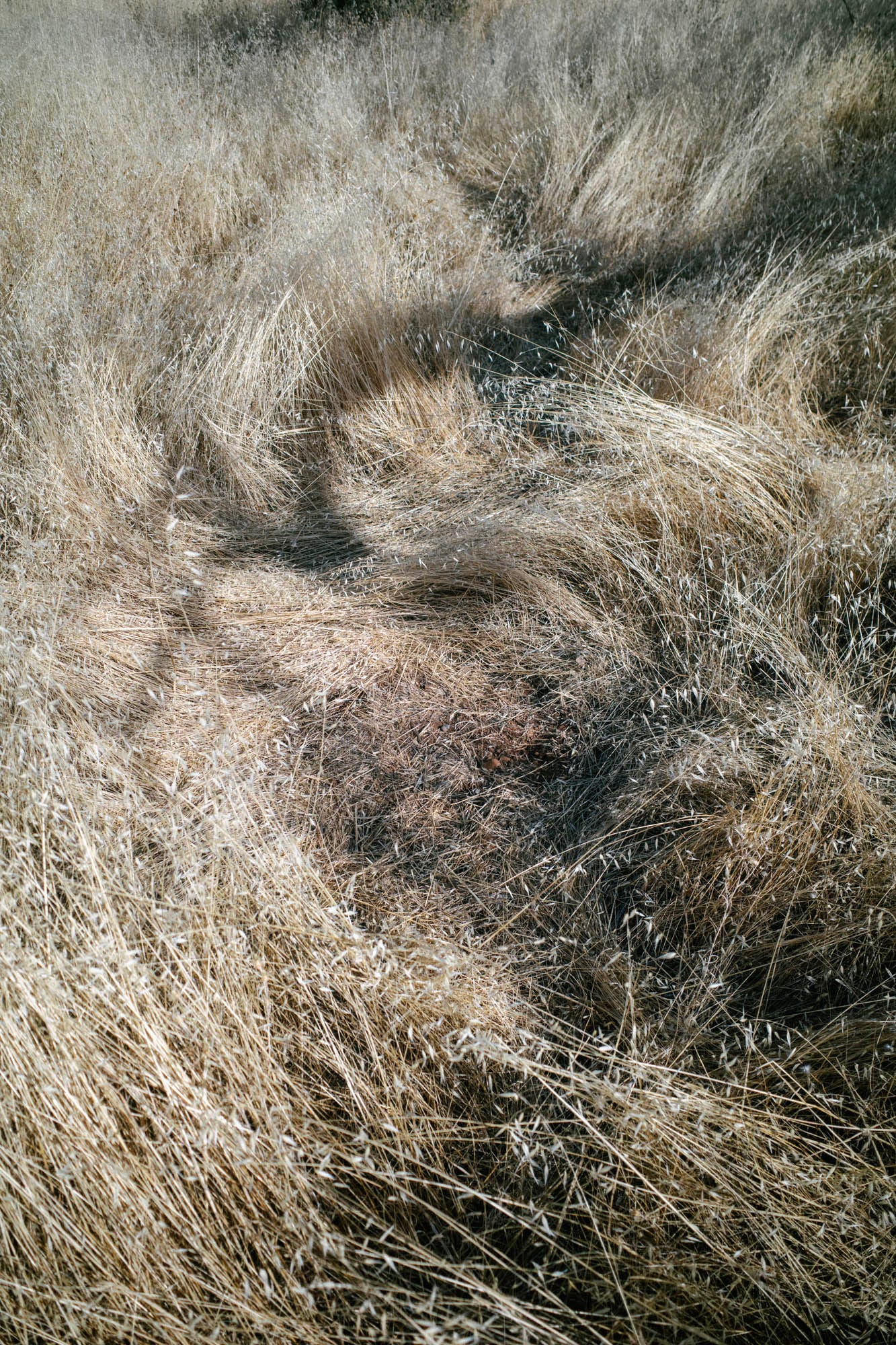
From across the valley, a place always looks completely different. As I reached the area where I shot the deer, I put down my pack and gun and started searching for blood or sign of the deer. Nothing. Pulling out my phone, I turned on the tracking feature on onX Hunt and started following every logical path, hoping to find either blood or the deer piled up under a tree.
There’s a point every hunter reaches after looking for an animal when the desire for the animal to be alive with a non-mortal wound surpasses the hope of it being dead and frozen in your refrigerator in a week.
The paradox of hunting is that I, and many others, deeply care about animals and grow familiar with and attracted to them from afar, watching through binoculars and with trail cameras, but ultimately do seek to kill. However, shooting an animal and not having it go well, wounding it and not recovering it, is a terrible experience. It can sour the whole process and keeps me up at night for weeks, if not months, replaying the event in my mind. I still wonder about the fate of pigs I’ve arrowed years ago and have regrets about processes that led to animals not dying fast enough after shooting them with a rifle.
Over the next three hours, I hiked three and a half miles, covering a grid of 300 yards by 250 yards, and didn’t see a single piece of hair, blood, or tissue that morning. I found an impact from one of my shots, and based on its positions and the lack of blood or tissue, came to the realization that it was most likely clean miss, however the other shots remained a mystery.
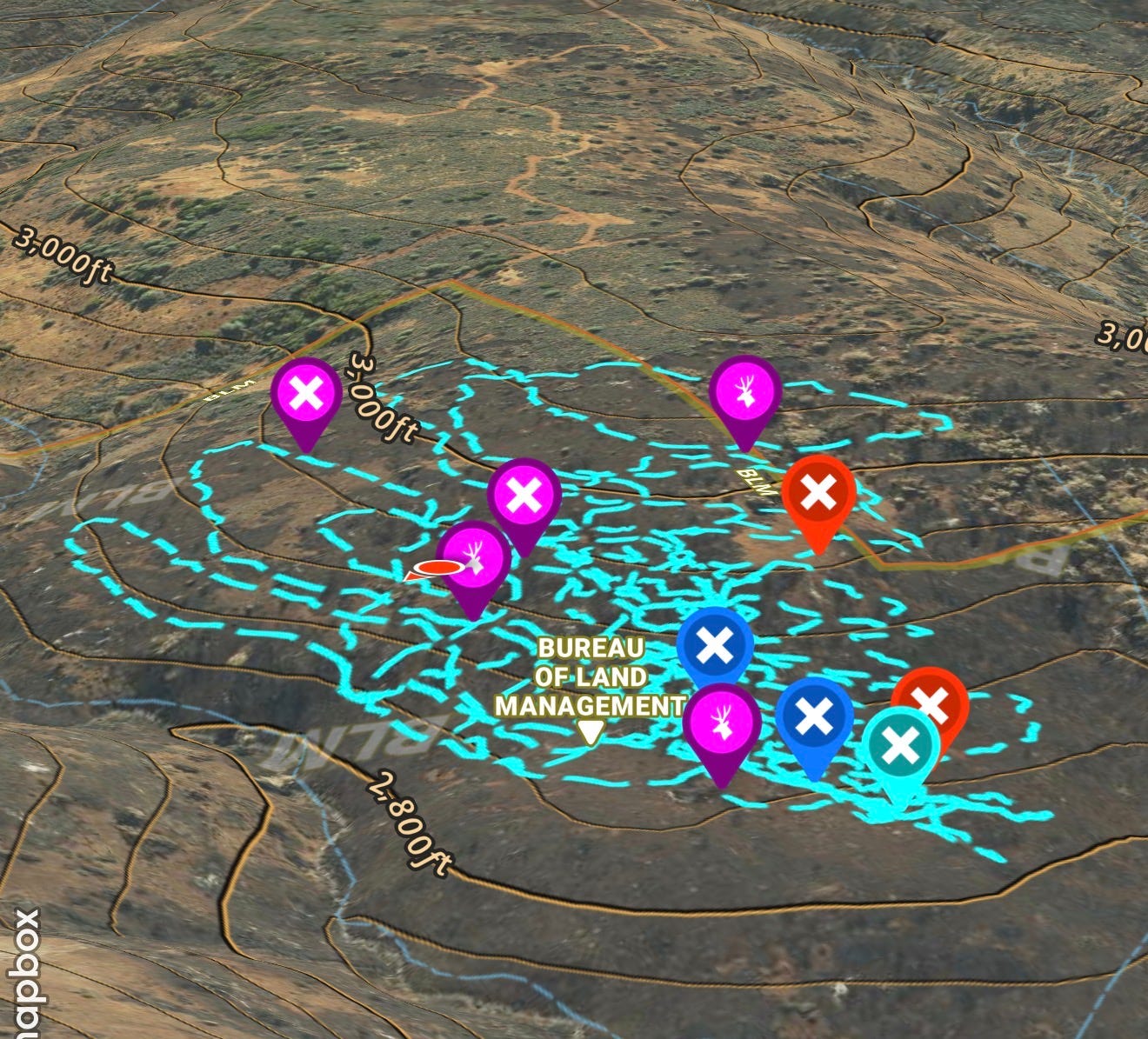
Out of water, down on morale, and hungry, I headed back to the van to regroup. As I cruised along on my UBCO, I came to the realization that regardless of the outcome of the search, my hunt was over. The chances of recovering an animal fall the further you get from the point of contact, and at this point I was already a few hundred yards up the hill, in the direction he ran, from where I shot him. Either the deer was crippled and I had a long and extended search ahead of me, or my rifle was fucked and shooting at another animal would be gravely unethical.
I restocked at the van, drank as much water as I could stomach and threw a few Gatorades into my pack, and went back out looking for him. It was the hottest time of the day, flirting with 90 degrees, but I had little choice. If the deer was dead, I needed to go out and recover the meat before it spoiled. Tim wanted to come with me, but all the burrs and poison oak gave me pause. This was something I had to do.
Like in the scene from The Good, the Bad and the Ugly where they’re searching for the money in the graveyard, I looked for any sign of the buck back on the hillside. Based on the recommendations of some experienced friends, I extended my search laterally and downward into the draw. If he was mortally wounded, he would have started uphill and then broken in one direction downhill.
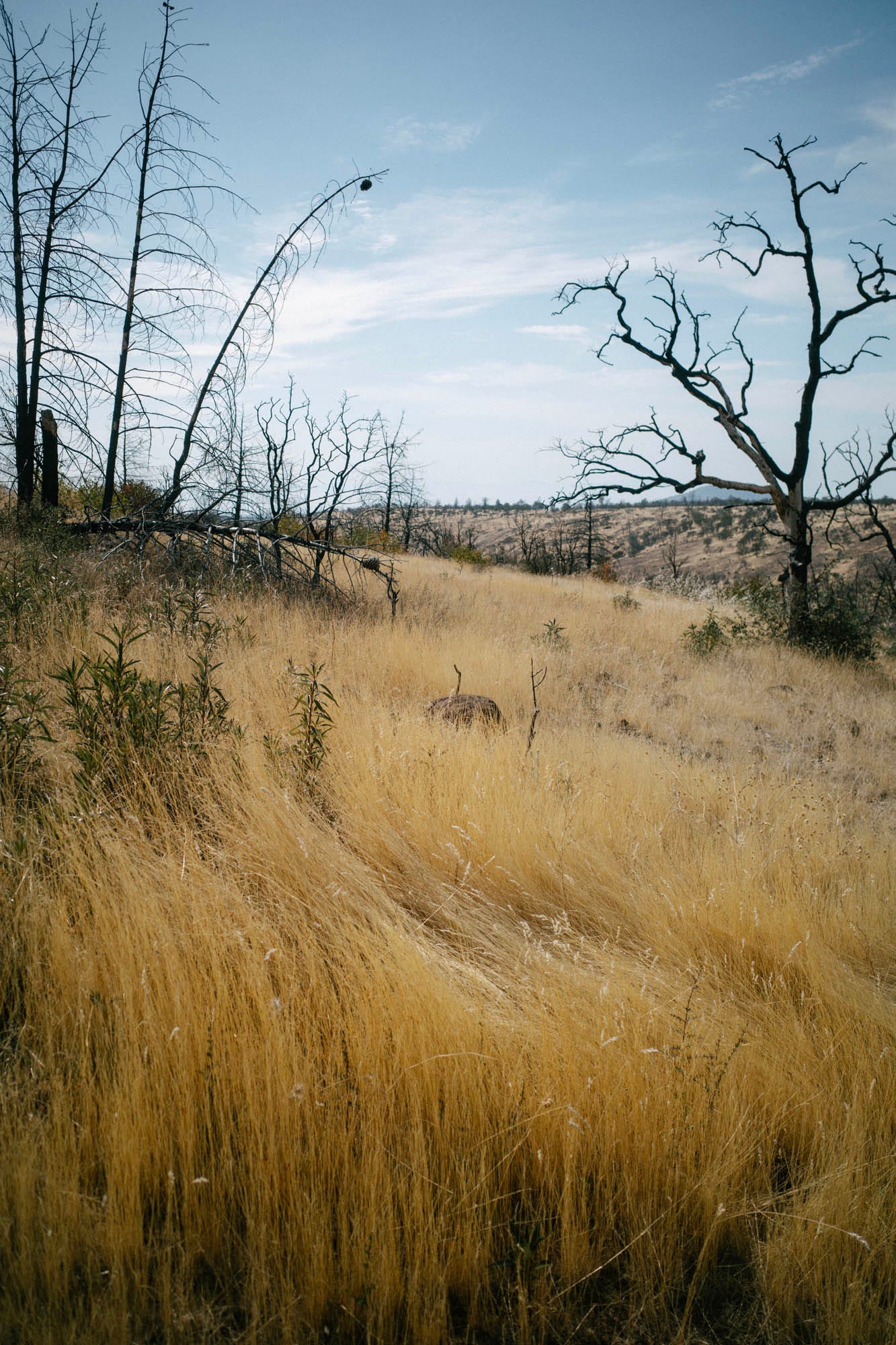
Fanning out, I continued the search during the heat of the day. Every stick morphed into an antler, and every rock in the grass looked like a deer’s butt. As the sun sank towards the Mendocino National Forest, I kept looking, slowly coming to the realization that he wasn’t in the area.
In my head, I ran through the events, recounting every detail. Multiple times, I returned to the bush the deer hid behind and reconstructed the drama. There is no version of this world where I miss three shots at 400 yards shooting from a bipod with a rear bag. There’s also no version of this world where I search for seven hours in a 500-by-500-yard area, hike seven miles, look behind every tree, and follow every deer trail in and out without finding a drop of blood or a dead deer.
